
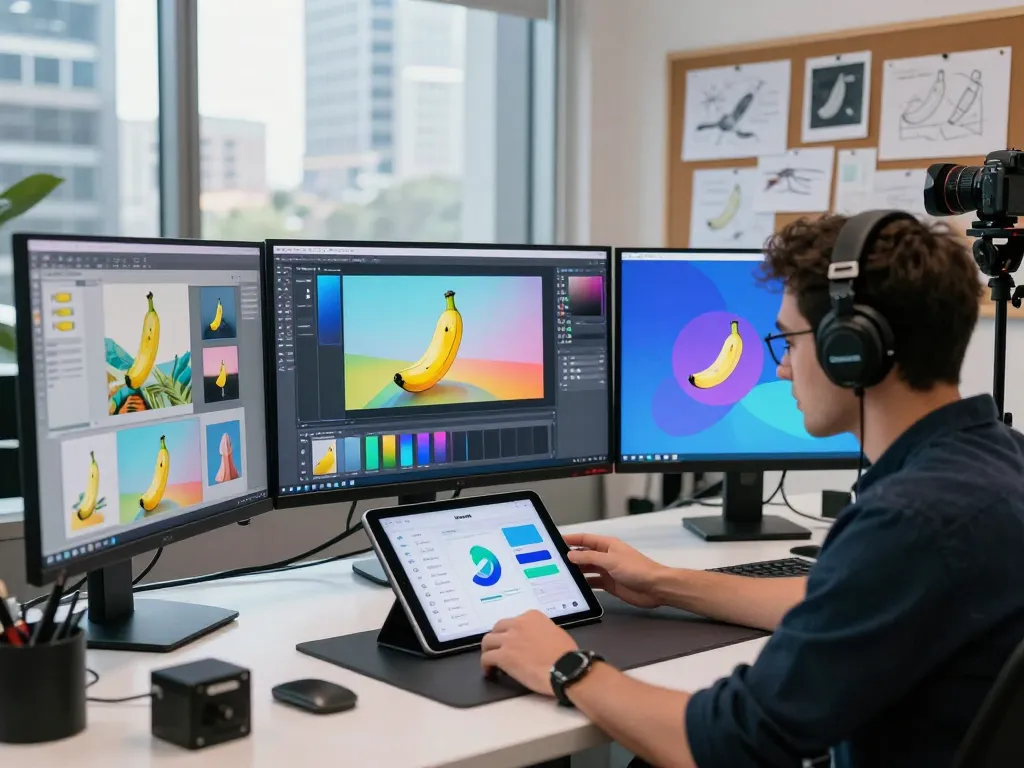
Understanding the Nano Banana AI Image Editor
The landscape of digital image editing is evolving rapidly, and at the forefront of this transformation is the Nano Banana AI Image Editor. This groundbreaking tool, powered by Google’s advanced AI models, allows users to edit images with unprecedented efficiency and creativity. With its intuitive interface and robust capabilities, Nano Banana represents a significant leap towards simplifying the complex world of digital image manipulation.
What is Nano Banana?
Nano Banana is an independent AI image editing platform that leverages Google’s proprietary Nano Banana Pro model. This platform is not just about basic image editing; it introduces a playful universe where every image starts as a “nano idea” — a conceptual seed that can grow and evolve through thoughtful editing. For creators, this means an opportunity to express their creativity without the constraints of conventional editing tools.
Key Features of Nano Banana AI
At the core of Nano Banana’s appeal are its innovative features, designed to cater to a diverse range of creative needs. Notable functionalities include:
- Advanced AI Reasoning: Nano Banana can understand the context of prompts, leading to more relevant and coherent image outputs.
- 3D Object Editing: Users can manipulate 3D objects seamlessly within a 2D space, allowing for intricate designs and layouts.
- Intelligent Image Generation: The platform excels at generating images from detailed text descriptions with remarkable accuracy.
- Consistency Preservation: Maintains visual consistency across various edits, ensuring that the overall composition remains intact.
- Context-Aware Editing: Enables users to perform edits that take into account the surrounding elements within an image.
The combination of these features underscores why nano banana is considered one of the most advanced AI image editors available today.
How Nano Banana Transforms Image Editing
Traditional image editing tools often require significant training and expertise. In contrast, Nano Banana democratizes the editing process, allowing both novices and professionals to create stunning visuals effortlessly. Its user-friendly design means that anyone can dive in and start transforming their ideas into visual masterpieces.
Getting Started with Nano Banana
Setting Up Your Workspace
Upon accessing the Nano Banana platform, users are greeted with a clean, intuitive interface that makes navigation a breeze. Setting up your workspace involves selecting your preferred layout and tools, ensuring a tailored editing experience that matches your creative style.
Initial Features to Explore
Beginners are encouraged to explore the basic functionalities such as image uploads, text-to-image conversion, and simple edits. As users become familiar with the interface, they can gradually delve into more sophisticated features like context-aware adjustments and 3D object manipulation.
Creating Your First AI Image
Creating your first image with Nano Banana is as simple as entering a text prompt describing your vision. The AI will process the input and generate a corresponding image, demonstrating its impressive text-to-image capabilities. This feature is particularly beneficial for those who may not have the artistic skills to create images from scratch.
Advanced Techniques in Nano Banana
Utilizing Advanced AI Reasoning
One of the standout features of Nano Banana is its advanced reasoning capability. The AI interprets your prompts not just in terms of words but in a more nuanced way, considering the underlying meaning and context. This results in images that are not only visually appealing but also resonate with the intended message.
3D Object Manipulation with Nano Banana
Editing objects in three dimensions within a two-dimensional canvas is now a reality with Nano Banana. This advanced feature allows users to take control of intricate details, making adjustments to lighting, shadows, and placement of 3D elements to achieve the desired effect.
Ensuring Consistency in Image Edits
Consistency is key in visual storytelling. Nano Banana excels in this area, providing editors with tools to ensure that imagery across projects remains uniform. Whether it’s maintaining a color scheme or adhering to a specific style, Nano Banana’s algorithms work tirelessly to achieve coherence across multiple edits.
Real-World Applications of Nano Banana
Transforming Product Visualization
In the realm of product design, Nano Banana has proven to be a game-changer. Brands can generate stunning product visuals that reflect their unique selling propositions without the need for extensive graphic design tools. This significantly reduces both time and costs associated with creating marketing materials.
Impact on Marketing Material Creation
Marketing professionals can harness the power of Nano Banana to create eye-catching campaigns. Utilizing AI-generated images allows for tailored content that speaks directly to the target audience’s preferences, ultimately enhancing engagement and conversion rates.
Enhancing Digital Art and Illustration
For digital artists, Nano Banana offers tools that simplify the creative process, allowing artists to focus on their craft rather than intricate technicalities. The ability to iterate on designs quickly enables artists to experiment with concepts that may have otherwise gone unexplored.
Comparing Nano Banana with Other AI Editors
Nano Banana vs. Competitors
When compared to existing AI image editors, Nano Banana stands out for its comprehensive approach to image creation and editing. The integration of Google’s advanced AI technology provides it with superior reasoning capabilities and visual understanding, allowing users to achieve results that would be difficult with other tools.
Performance Metrics: Nano Banana 2 vs. Other Models
Performance analysis reveals that Nano Banana 2, also referred to as Nano Banana Pro, outperforms competitors like Flux Kontext and Gemini 2.0 Flash in critical areas such as text preservation and spatial understanding. This makes it an ideal choice for professional workflows that demand precision and consistency.
Future Trends in AI Image Editing for 2026
As we look ahead, the trajectory of AI image editing will likely focus on even deeper integrations of machine learning and user feedback. Expect advancements that not only improve image quality but also enhance user experience, making AI editing more accessible and streamlined for all types of creators.